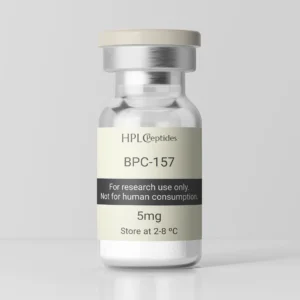
GLOW evolved — adding KPV’s NF-kB inflammation control to create the most comprehensive community tissue repair and anti-ageing stack currently in widespread use.
What is the KLOW Stack and why is it considered the most complete peptide repair and anti-ageing stack currently in community use? KLOW is a four-peptide combination of BPC-157, TB-500, GHK-Cu, and KPV. It builds directly on the GLOW Stack by adding KPV — a tripeptide fragment of the hormone alpha-MSH that inhibits NF-kB, the master regulator of inflammatory gene expression. Where GLOW targets repair, recovery, and collagen synthesis, KLOW adds a fourth layer of dedicated systemic inflammation control — addressing the chronic low-grade inflammation that often limits how effectively the body’s repair mechanisms can operate.
| TL;DRKLOW is a four-peptide stack combining BPC-157 (angiogenesis and local repair), TB-500 (systemic cell mobilisation), GHK-Cu (collagen synthesis and anti-ageing gene modulation), and KPV (NF-kB inhibition and systemic inflammation control). It builds on GLOW by adding KPV’s anti-inflammatory mechanism, making it the preferred stack when chronic inflammation is limiting the body’s response to repair protocols. The standard commercial formulation is an 80mg blend with GHK-Cu as the dominant component at 50mg. |
| Peptide | Standard Dose | Primary Role | Key Mechanism |
| BPC-157 | 10mg (blend) / 250–500mcg (solo) | Local tissue repair | VEGF, angiogenesis, GH receptor upregulation |
| TB-500 | 10mg (blend) / 2–2.5mg (solo) | Systemic cell mobilisation | Actin regulation, stem cell activation |
| GHK-Cu | 50mg (dominant in blend) | Collagen and gene modulation | Collagen I/III/IV synthesis, MMP regulation, 4,000+ gene effects |
| KPV | 10mg (blend) | Inflammation control | NF-kB inhibition, IL-6 and TNF-alpha suppression |
KLOW is a four-peptide combination that represents the current most comprehensive community-developed peptide repair stack. The name is derived from the initial letters of its unique fourth component — KPV — combined with LOW from GLOW, reflecting its direct evolutionary relationship to the GLOW Stack.
The standard commercial formulation is an 80mg pre-blended vial with the following composition: GHK-Cu 50mg, BPC-157 10mg, TB-500 10mg, and KPV 10mg. GHK-Cu is intentionally the dominant component by weight, reflecting its gene expression and collagen synthesis role requiring higher concentrations for biological activity.
| Stack | Components | Primary Focus |
| Wolverine | BPC-157 + TB-500 | Tissue repair and recovery — the foundational healing stack |
| GLOW | BPC-157 + TB-500 + GHK-Cu | Adds collagen synthesis, skin regeneration, and gene expression modulation |
| KLOW | BPC-157 + TB-500 + GHK-Cu + KPV | Adds systemic inflammation control via NF-kB inhibition |
KLOW contains four peptides, each targeting a distinct biological mechanism:
Understanding KLOW requires understanding where it sits in the evolution of community peptide stacks:
| Stack | What Each Layer Adds |
| Wolverine (BPC-157 + TB-500) | The foundational healing duo. Localised repair plus systemic cell mobilisation. Targets acute and chronic injury recovery. |
| GLOW (+ GHK-Cu) | Adds structural and anti-ageing dimension. Collagen synthesis, skin regeneration, and broad gene expression modulation addressing age-related GHK-Cu decline. |
| KLOW (+ KPV) | Adds dedicated inflammation control. NF-kB inhibition allows the repair-focused components to operate in a lower-inflammation environment, accelerating and deepening the healing response. |
KPV is a tripeptide consisting of three amino acids: Lysine-Proline-Valine. It is derived from the C-terminal sequence of alpha-melanocyte-stimulating hormone (alpha-MSH) — a naturally occurring peptide hormone with well-documented anti-inflammatory properties.
KPV’s mechanism is highly specific and potent: it inhibits NF-kB (Nuclear Factor kappa B) — the master transcription factor that controls the expression of hundreds of pro-inflammatory genes. By blocking NF-kB directly, KPV reduces IL-6, TNF-alpha, and other key inflammatory mediators at the gene expression level.
| Why NF-kB Inhibition MattersChronic low-grade inflammation — sometimes called inflammaging — is one of the primary biological drivers of age-related tissue decline and impaired healing. When NF-kB activity is chronically elevated, it suppresses the repair pathways that BPC-157, TB-500, and GHK-Cu are designed to activate. KPV’s NF-kB inhibition removes this brake on the repair response, allowing the other three components of KLOW to operate more effectively. |
KPV’s additional properties that make it particularly suitable for KLOW:
The four components of KLOW address the four primary biological barriers to tissue repair and regeneration:
| Barrier to Repair | KLOW Component That Addresses It |
| Inadequate blood supply to the repair site | BPC-157 — VEGF upregulation and angiogenesis restore vascular supply |
| Insufficient repair cells reaching the injury | TB-500 — actin regulation and stem cell mobilisation direct repair cells to injury sites |
| Poor collagen quality and structural rebuild | GHK-Cu — collagen types I/III/IV stimulation, lysyl oxidase support, MMP regulation |
| Chronic inflammation suppressing the repair response | KPV — NF-kB inhibition reduces IL-6, TNF-alpha, and the inflammatory brake on healing |
One of KLOW’s distinctive strengths relative to other stacks is its particular relevance to the gut-skin axis — the bidirectional relationship between gut barrier integrity and systemic skin and connective tissue health.
For biohackers with gut-related conditions alongside skin or recovery goals, KLOW’s coverage of the gut-skin axis makes it particularly relevant.
KLOW has grown rapidly in biohacking communities as awareness of NF-kB’s role in inflammaging has increased. Its applications include:
| Choose GLOW when… | Choose KLOW when… |
| Primary goal is tissue repair and skin collagen without significant inflammation concerns | Chronic inflammation is suspected as a limiting factor in recovery or healing |
| New to peptide stacking — fewer components to monitor | Gut-related inflammatory conditions are part of the protocol context |
| Recovery from acute injury without systemic inflammation | Autoimmune or inflammatory overlay is present alongside the repair goal |
| Skin regeneration and anti-ageing collagen are the primary objectives | Systemic inflammaging is a concern in longevity protocols |
| Preference for a simpler three-peptide stack | Previous GLOW use has produced partial results — KPV may provide the missing layer |
| Component | Research-Grade Quality Standard |
| BPC-157 | Greater than 98% by reversed-phase HPLC; MS confirmation; methionine oxidation check recommended |
| TB-500 | Greater than 98% by reversed-phase HPLC; MS confirmation of molecular weight |
| GHK-Cu | Greater than 98% by reversed-phase HPLC; copper content verification required; MS confirmation |
| KPV | Greater than 98% by reversed-phase HPLC; MS confirmation; each component greater than 99% in standard commercial 80mg blend |
Pre-blended KLOW formulations (80mg) should carry a CoA confirming purity for each component individually. A single overall purity figure for a blend does not confirm that each peptide within it meets the research-grade standard. For full testing guidance see hplcpeptides.com/wiki/peptide-testing.
| Standalone Factual Statements |
KLOW is a four-peptide combination of BPC-157, TB-500, GHK-Cu, and KPV. It builds on the GLOW Stack by adding KPV — a tripeptide that inhibits NF-kB, the master regulator of inflammatory gene expression. The addition of KPV provides dedicated systemic inflammation control, making KLOW the preferred stack when chronic inflammation is a limiting factor in repair or recovery.
KPV adds NF-kB inhibition — direct suppression of the master inflammatory signalling switch. Where the three components of GLOW address blood supply, cell mobilisation, and collagen synthesis, KPV addresses the inflammatory environment that can suppress all three of those repair mechanisms. It also adds oral bioavailability and specific gut anti-inflammatory activity not provided by the other components.
KPV and BPC-157 both demonstrate meaningful oral bioavailability, which is unusual for peptides. This means a KLOW protocol can include oral administration of these components for gut-specific targeting alongside subcutaneous injection for systemic effects. TB-500 and GHK-Cu are typically administered subcutaneously.
KLOW is not universally better than GLOW — it is more appropriate in specific contexts. GLOW is the preferred starting point for most repair and collagen protocols. KLOW’s additional layer of NF-kB inflammation control makes it preferable when chronic inflammation, gut-related conditions, or autoimmune overlap are part of the picture. Many community protocols recommend beginning with GLOW and progressing to KLOW if needed.
The standard commercial KLOW pre-blend is an 80mg formulation containing GHK-Cu 50mg, BPC-157 10mg, TB-500 10mg, and KPV 10mg. GHK-Cu is the dominant component by design, as its biological activity requires higher concentrations than the other three peptides.
| Term | Definition |
| KLOW Stack | Community name for the four-peptide combination of BPC-157, TB-500, GHK-Cu, and KPV. Builds on GLOW by adding KPV’s NF-kB-mediated inflammation control. |
| KPV | Lysine-Proline-Valine. A tripeptide derived from alpha-MSH that inhibits NF-kB at nanomolar concentrations. The distinguishing component of KLOW vs GLOW. |
| NF-kB | Nuclear Factor kappa B. The master transcription factor controlling hundreds of pro-inflammatory genes. KPV’s primary mechanism of action is direct NF-kB inhibition. |
| alpha-MSH | Alpha-melanocyte-stimulating hormone. A naturally occurring peptide hormone with anti-inflammatory properties. KPV is derived from its C-terminal tripeptide sequence. |
| Inflammaging | Chronic low-grade inflammation associated with ageing that suppresses repair mechanisms and drives age-related tissue decline. A primary target of KPV’s NF-kB inhibition in longevity protocols. |
| Gut-skin axis | The bidirectional relationship between gut barrier integrity and skin/connective tissue health. KLOW’s combination of BPC-157 and oral KPV makes it particularly relevant to gut-skin axis protocols. |
| IL-6 | Interleukin-6. A pro-inflammatory cytokine suppressed by KPV through NF-kB inhibition. Chronically elevated IL-6 is associated with tissue degeneration and impaired healing. |
| TNF-alpha | Tumour Necrosis Factor alpha. A primary pro-inflammatory cytokine. Suppressed by both GHK-Cu and KPV in KLOW, providing dual-mechanism anti-inflammatory coverage. |
| Related Entity Pages-> GLOW Stack — BPC-157, TB-500, GHK-Cu hplcpeptides.com/wiki/glow-> Wolverine Stack — BPC-157 + TB-500 hplcpeptides.com/wiki/wolverine-> KPV — Anti-Inflammatory Tripeptide hplcpeptides.com/wiki/kpv-> BPC-157 — Tissue Repair and Gut Health hplcpeptides.com/wiki/bpc-157
-> TB-500 — Recovery and Regeneration hplcpeptides.com/wiki/tb-500 -> GHK-Cu — Collagen Synthesis and Regeneration hplcpeptides.com/wiki/ghk-cu -> Peptide Testing — Purity, Quantity and Integrity hplcpeptides.com/wiki/peptide-testing -> Dr William Seeds — Peptide Therapy Protocols hplcpeptides.com/wiki/dr-william-seeds |
| Research DisclaimerThese peptide stacks are discussed for informational and research reference purposes only. None of the combinations described on this page are approved for human therapeutic use by the FDA, EMA, or equivalent regulatory bodies. All evidence for individual components is preclinical unless otherwise stated. This page does not constitute medical advice. Consult a qualified healthcare professional before considering any peptide-related intervention. |
| About This PageThis entity page is maintained by the HPLC Peptides editorial team. Stack terminology reflects current biohacking community conventions. This page does not constitute medical advice. |
hplcpeptides.com/wiki/klow-stack | Entity Page v1.0 | April 2026